Week 8 Blog

https://archive.nytimes.com/bits.blogs.nytimes.com/2008/01/25/the-art-of-nanotech/
“Art could become the loudspeaker science needs to re-establish itself as a trustworthy source of knowledge.”(Art for Science) In this week's blog, we will be discussing the interesting connection between nanotechnology and art. While doing research for this topic I came across this quote by The University of Texas at Dallas “Nano Art is a discipline that discovers and accentuates the artistic beauty of nanometer sized natural and artificial structures.” (University of Texas at Dallas).
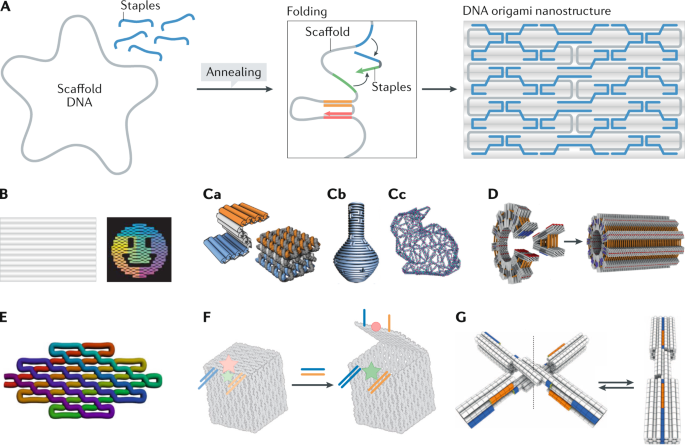
https://www.nature.com/articles/s43586-020-00009-8
I was quite interested, as I was quite unsure how nano art would work. Furthermore, watching the TED Talk by Paul Rothemund, I learned about DNA origami. I was quite amazed at how DNA was able to be controlled and arranged into arbitrary shapes, which blend together both fields of art and science.(Paul Rothemund) Nanoscience can also aid in helping preserve ancient and historical artwork. “EAPC has also been used to remove aged coatings (including silicone resins) from paintings in the Annunciation church in Nazareth, Israel, where traditional solvents (for example, a mixture of aliphatic and aromatic hydrocarbons) had proved ineffective.” (Baglioni) The concept of using nanotechnology to help preserve art is very important, as other traditional methods seem to be quite inefficient and also have been quite detrimental relative to nanotechnology.
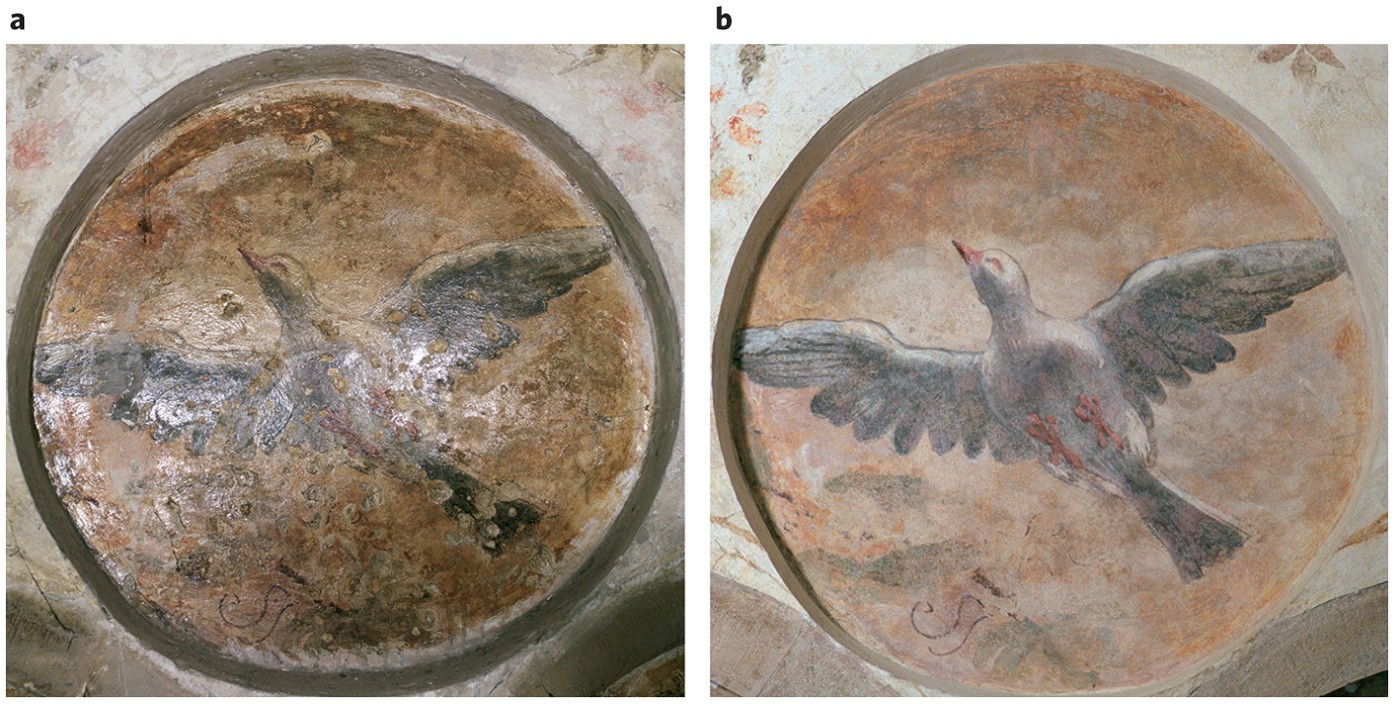
https://www.nature.com/articles/nnano.2015.38
Another method they use is using nanoparticles to help restore artifacts and bones. “Hard, inorganic nanoparticles such as calcium hydroxide and silica nanoparticles are also being used in various art restorations” (Art Conservation and Nanotechnology). Being able to help restore ancient artifacts is important as it will help people from all around the world preserve their culture throughout time by utilizing nanotechnology. The conservation of these cultural artifacts can also prove to be useful in learning how to develop a future society where the cultural heritage of all cultures is not lost throughout time.
Sources:
"Art for Science." Nature Nanotechnology, vol. 14, no. 5, 2019, p. 399. https://doi.org/10.1038/s41565-019-0459-1
"Art Conservation and Nanotechnology: A Wonderful Confluence of Arts and Sciences." Sustainable Nano, 12 May 2017, https://sustainable-nano.com/2017/05/12/art-conservation-and-nanotechnology/.
Baglioni, Piero, Emiliano Carretti, and David Chelazzi. "Nanomaterials in Art Conservation." Nature Nanotechnology, vol. 10, no. 4, 2015, pp. 287–290. https://doi.org/10.1038/nnano.2015.38
University of Texas at Dallas. "Nano Art: Mountain Castle." Material Science Engineering, https://mse.utdallas.edu/news/feature-story-nano-art/
Rothemund, Paul. “DNA Folding, in Detail.” TED, March 2007, https://www.ted.com/talks/paul_rothemund_dna_folding_in_detail


Comments
Post a Comment