Week 9
In this week's blog, we learned about the connection between space and art. Prior to reading the material for this week’s blog, my understanding of how art and space correlated with each other was lackluster. When reading the material, I was fascinated by how the Cultural Center of European Space Technologies (KSEVT) and how “The program includes additional cultural (exhibitions, events) and scientific activities (research, conferences) strongly connected to the phenomena of ‘culturalisation of the space” (KSEVT). Furthermore, the architecture that is displayed highlights the usage and the interconnection that space has within art, and how we express our understanding of it.

https://en.wikipedia.org/wiki/Herman_Poto%C4%8Dnik_Noordung_Center_of_Space_Technologies
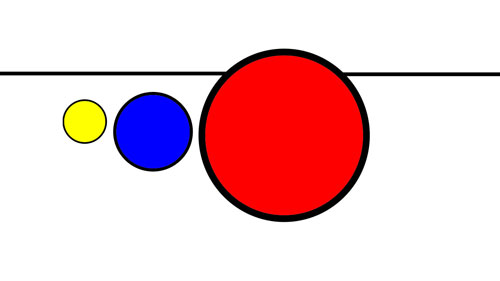
I found another article that touches on the topic of how space art has the ability to tell a story through how a character is expressed within the spatial background that they are in. “Space emphasizes a narrative, highlights a character, or sets a scene. In sculpture, the space around and between forms is as expressive as the forms themselves.” (Space in Art) Space within art can also create illusions for the human eye. Depending on the size relative to the space of the artwork, the smaller object could appear as further away. In addition, depending on the distance of the object within an artwork, its color can appear slightly different. “Objects that are further away are cooler in color temperature, while objects that are closer are warmer. Objects that are further away are lighter in value, while objects that are closer are typically darker in value.” (Fussell)
https://thevirtualinstructor.com/space.html
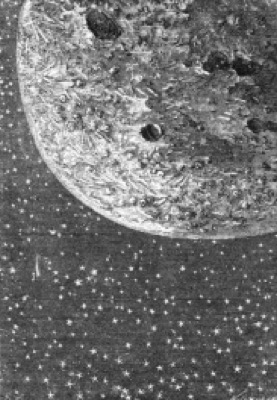
Lastly, I learned about how artists have contributed to the research and exploration of space by creating depictions of it throughout history. This dates all the way back to the 1800s, as artist Emile-Antoine Bayard and Alphonse-Marie de Neuville illustrated “the first attempts to depict realistically a space flight and the conditions that existed beyond Earth’s atmosphere.” (Timeline: Early Space Art) Moreover, modern-day astronaut Alan Bean has also recreated his Apollo 12 mission to the moon “resigned from the organization in 1981 to paint space art full-time; he labored over the mathematical and scientific accuracy of his work” (Medrano). In conclusion, I find it fascinating how artist have used Space and also concepts of space to help transform their artwork.
https://artmuseum.princeton.edu/transient-effects/painter-sun/northern-lights-and-worlds-beyond/imagining-un-seeable-early-space-artists%E2%80%94-timeline/timeline-early-space-art
Source:
"BUILDING — KSEVT." KSEVT, www.ksevt.eu/about.
“Space in Art: More Than Meets the Eye.” Artsology, 10 Apr. 2024, https://artsology.com/blog/2024/04/space-in-art-more-than-meets-the-eye/.
Fussell, Matt. "The Elements of Art - Space." The Virtual Instructor, https://thevirtualinstructor.com/space.html.
"Timeline: Early Space Art." Princeton University Art Museum, https://artmuseum.princeton.edu/transient-effects/painter-sun/northern-lights-and-worlds-beyond/imagining-un-seeable-early-space-artists%E2%80%94-timeline/timeline-early-space-art
Medrano, Kastalia. “The Art of Space Art.” The Paris Review, 14 Sept. 2017, www.theparisreview.org/blog/2017/09/14/the-art-of-space-art/.


Comments
Post a Comment